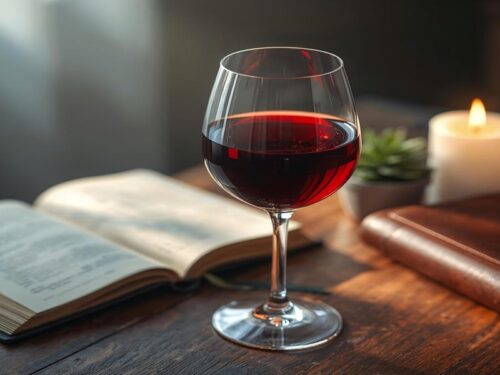
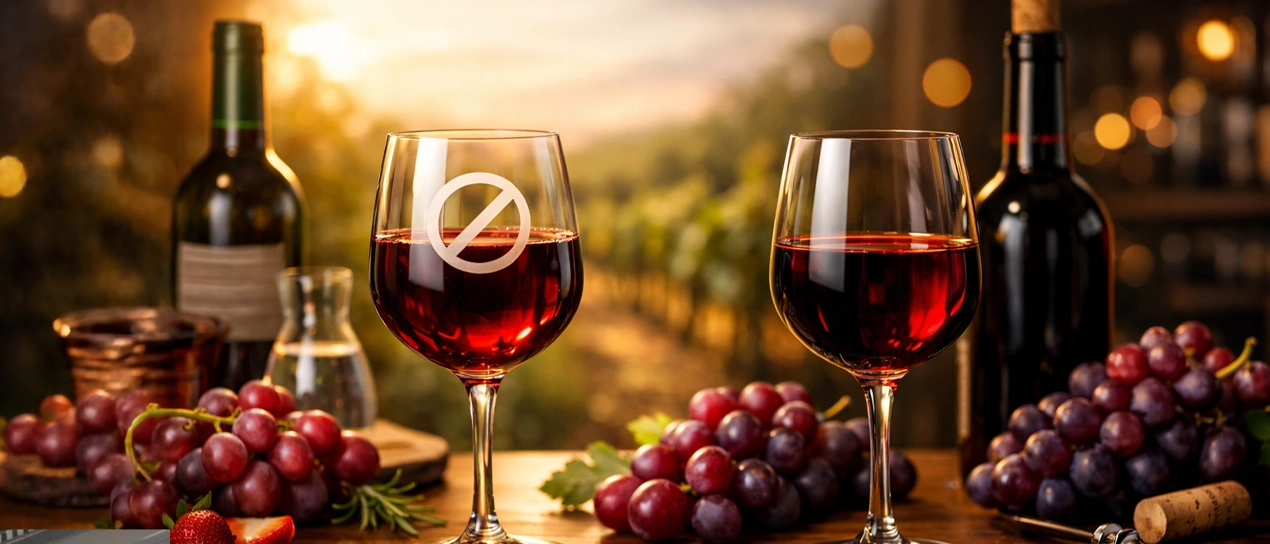
What Is Non-Alcoholic Red Wine and How Is It Different From Regular Wine?
Stats for the day: Alcohol-free red wine had about 363 mg/L of polyphenols, which are antioxidant plant compounds. (Source)
Let’s start with a simple question about wine….
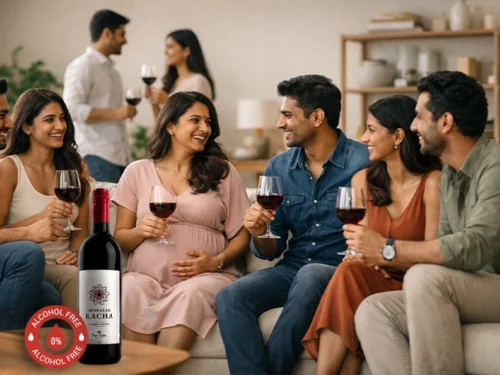
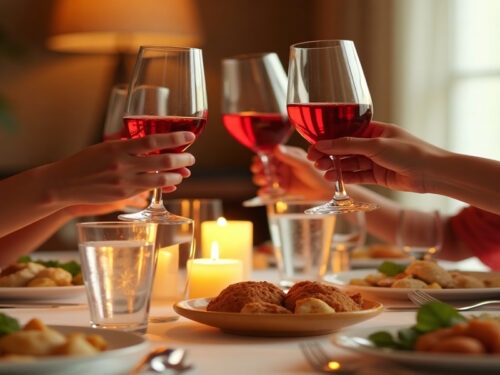
Not long ago, during a small dinner with friends, someone placed a bottle of non-alcoholic red wine on the table. Immediately, the questions started.
“Wait… wine without alcohol?”
Another friend picked up the bottle and looked at the label again. “So is this just grape juice in a wine bottle?”
Everyone laughed, but the curiosity was real. Most people at the table had heard about non-alcoholic wine, but no one really knew how it was made or how different it was from regular wine.
One person assumed it must taste the same as normal wine. Someone else said it probably tasted nothing like it.
That little discussion made one thing clear. Many people are curious about non-alcoholic wine, but they are not always sure what it really is. To understand it properly, we first need to look at how traditional red wine is made.
How Regular Red Wine Is Made
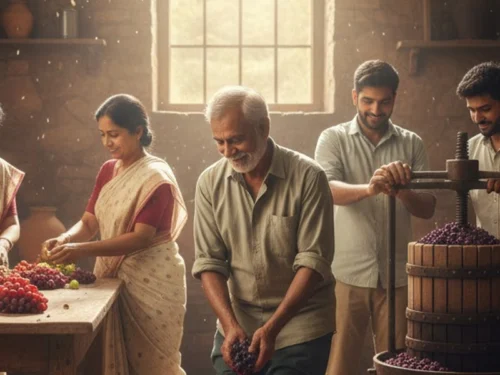
Regular red wine starts with grapes grown in vineyards. But not just any grapes. Winemakers usually use special wine grapes such as Cabernet Sauvignon, Merlot, Pinot Noir, or Syrah.
These grapes are carefully grown in environments where soil, climate, and sunlight help develop their flavor. In the wine world, this combination of natural factors is often called terroir.
Once the grapes reach the right level of ripeness, they are harvested and crushed. After that comes the most important step in winemaking: fermentation.
During fermentation, yeast converts the natural sugars in grapes into alcohol. This process transforms simple grape juice into wine.
Along with alcohol, fermentation also creates the elements that give wine its character:
- Tannins, which create structure and a slight dryness
- Acidity, which keeps the wine fresh and lively
- Aromas and flavours that develop over time
Alcohol plays an important role in how wine feels and tastes. It gives wine warmth and body, and it helps carry aromas from the glass to your nose.
When you take a sip of traditional red wine, you might notice layers of flavor like berries, spice, oak, or even hints of chocolate. That complexity is the result of fermentation, ageing, and the presence of alcohol working together.
This is why traditional wine is often seen as a rich and complete drinking experience.
What Non-Alcoholic Red Wine Is
Now here is where things get interesting!
Despite what some people think, non-alcoholic red wine is not simply grape juice. In many cases, it actually begins as regular wine.
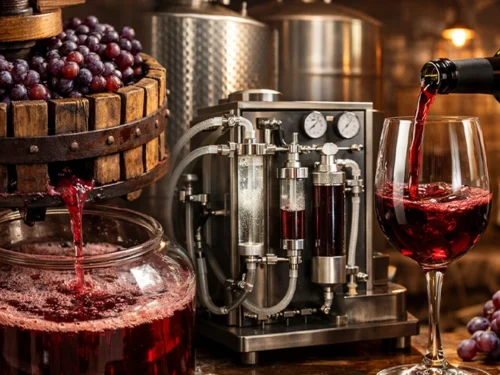
Winemakers start with the same process used for traditional wine. The grapes ferment, flavors develop, and the wine matures. Only after that step is complete does something different happen. The alcohol is removed.
Yes! Using special techniques, producers separate alcohol from the wine while trying to keep as much of the original flavor as possible.
Most non-alcoholic wines still contain a very small amount of alcohol, usually less than 0.5%. This amount is considered extremely low and does not cause intoxication.
Methods to remove alcohol from wine
- One common method is vacuum distillation, where alcohol evaporates at a lower temperature so the wine’s delicate flavors remain intact.
- Another technique is reverse osmosis, which uses filtration to separate alcohol molecules from the rest of the wine.
- Some wineries also use spinning cone technology, a more advanced process that gently removes alcohol while preserving aroma compounds.
These methods allow producers to create wine that still looks, smells, and tastes similar to traditional wine, but without the alcohol.
Non-Alcoholic vs Regular Wine: Taste & Experience
This was the big question everyone at the dinner table wanted answered.
Does non-alcoholic red wine taste the same as regular wine? The honest answer is that it can taste similar, but it is usually not identical.
Alcohol contributes to the body and texture of wine. When alcohol is removed, the wine may feel a little lighter on the palate.
One of my friends described it in a simple way. “It’s like listening to the acoustic version of a song you love. The melody is still there, but it feels softer.”
That comparison actually captures the experience well.
Non-alcoholic red wine can still carry familiar flavors such as dark berries, cherry, or plum. However, the overall intensity may be slightly reduced. Another noticeable difference is the finish, which refers to how long the flavor lingers after a sip. Traditional wines often have a longer finish because alcohol helps carry the flavor.
But non-alcoholic wines tend to have a shorter finish.
Even so, modern alcohol-free wines have improved significantly in recent years. Many producers now focus on preserving texture, aroma, and balance, making the experience much closer to traditional wine than it used to be.
When to Serve Non-Alcoholic Red Wine?
During that dinner conversation, someone commented on something that many people could relate to.
“I enjoy wine, but sometimes I just don’t want the alcohol.”
That simple thought explains why non-alcoholic wine is becoming more popular.
People choose it for many reasons. Some are reducing alcohol for health or wellness goals. Others want a wine-like drink during social events without feeling the effects of alcohol.
Non-alcoholic red wine can also be useful in situations where alcohol may not be appropriate, such as:
- Lunch gatherings
- Business meetings
- Weeknight dinners
- Events where someone needs to drive afterwards
Checkout: Can Non-Alcoholic Wine Add Class to Business Dinners Without the Hangover?
It allows people to enjoy the ritual and flavor of wine without worrying about alcohol consumption.
For many people, it simply offers another choice.
Traditional wine still has its place during celebrations or special dinners. But non-alcoholic wine creates an option for moments when someone wants the experience without the alcohol.
Conclusion
Non-alcoholic red wine is often misunderstood, but it is not just grape juice in disguise. In many cases, it begins as real wine and goes through a careful process to remove alcohol while keeping much of the flavor. It focuses on delivering the taste and atmosphere of wine without the intoxicating effect.
If you would like to enjoy the real richness of non-alcoholic wine, visit Great Indian Beverages. Available in classic and cane sugar flavors. Shop non-alcoholic red wine.
Also read: How Great Indian Beverages Makes Its Handcrafted, Preservative-Free Wine